
HIGHLAND DANCE
For many years, the Highland dance competition has brought dancers to the fest from all over the Pacific northwest.
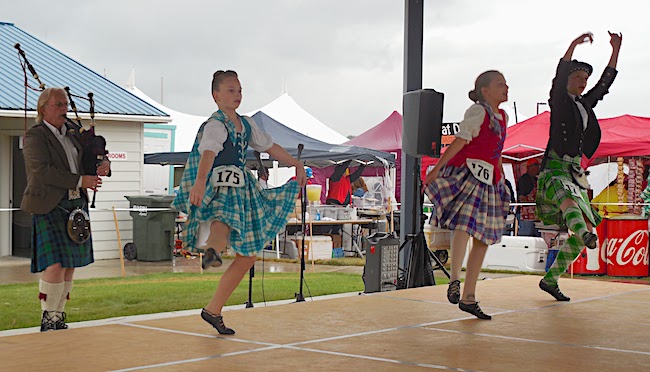
Scottish Fest attendees have an opportunity to see traditional Scottish Highland dance competitions featuring jigs, reels, flings, sword dance, and national dances.
The sanctioned Highland Dance competitions feature Scottish Highland dances which were performed by men as pre-battle preparations and victory celebrations plus National dances developed after the Highland Dances were banned by the English. Competitive choreography feature original creative dances in a modern Highland style.
Email the Highland Dance Chair (dance@prosserscottishfest.org) for information on 2026 Highland Dance events.
Download the 2026 entry form here: 2026 PSF Highland Dance Entry Form
The sanctioned Highland Dance competitions feature Scottish Highland dances which were performed by men as pre-battle preparations and victory celebrations plus National dances developed after the Highland Dances were banned by the English. Competitive choreography feature original creative dances in a modern Highland style.
Email the Highland Dance Chair (dance@prosserscottishfest.org) for information on 2026 Highland Dance events.
Download the 2026 entry form here: 2026 PSF Highland Dance Entry Form
Some of the legends associated with Scottish Highland Dances include:
The Sword Dance
One story recalls that when King Malcolm III (Canmore) of Scotland killed a fellow chieftain in battle, he celebrated by dancing over his own bloody claymore crossed with the sword of his enemy.
Another story tells that a soldier would dance around and over crossed swords prior to battle. If his feet should touch the blade during the dance however, then this was considered an ill omen for the following day.
A more practical explanation is that the dance was simply an exercise used to develop and hone the nimble footwork required to stay alive while fighting with swords.
The Seann Triubhas (Gaelic for “old trousers”)
Pronounced “shawn trewus”, the dance is romantically associated with the highlander’s disgust at being forced to the wear the hated Sassenach trousers when the kilt was banned following the 1745 rebellion.
The initial slow dance steps involve lots of leg shaking, symbolizing attempts to shed the hated garments. The final faster steps demonstrate the joy of returning to wearing the kilt when the ban ended in 1782.
The Highland Fling
One legend associates the dance as a warriors dance of triumph following a battle. It was supposedly danced over a Targe, a small round shield with a spike projecting from the center.
Another legend links the dance to a young boy imitating the antics of a Highland stag rearing and wheeling on a hillside, with the curved arms and hands representing the stag’s antlers.
The Reel of Tulloch
Supposedly on one cold morning many years ago in the village of Tulloch in north-east Scotland, the congregation were waiting for the minister to let them into the church. To keep warm, the people began to stamp their feet and clap their hands. When someone started to whistle a Highland tune the whole thing developed into a lively dance.
A more gruesome story however, links the dance to a game said to have been played by the men of Tulloch with the severed head of an enemy.
The Sword Dance
One story recalls that when King Malcolm III (Canmore) of Scotland killed a fellow chieftain in battle, he celebrated by dancing over his own bloody claymore crossed with the sword of his enemy.
Another story tells that a soldier would dance around and over crossed swords prior to battle. If his feet should touch the blade during the dance however, then this was considered an ill omen for the following day.
A more practical explanation is that the dance was simply an exercise used to develop and hone the nimble footwork required to stay alive while fighting with swords.
The Seann Triubhas (Gaelic for “old trousers”)
Pronounced “shawn trewus”, the dance is romantically associated with the highlander’s disgust at being forced to the wear the hated Sassenach trousers when the kilt was banned following the 1745 rebellion.
The initial slow dance steps involve lots of leg shaking, symbolizing attempts to shed the hated garments. The final faster steps demonstrate the joy of returning to wearing the kilt when the ban ended in 1782.
The Highland Fling
One legend associates the dance as a warriors dance of triumph following a battle. It was supposedly danced over a Targe, a small round shield with a spike projecting from the center.
Another legend links the dance to a young boy imitating the antics of a Highland stag rearing and wheeling on a hillside, with the curved arms and hands representing the stag’s antlers.
The Reel of Tulloch
Supposedly on one cold morning many years ago in the village of Tulloch in north-east Scotland, the congregation were waiting for the minister to let them into the church. To keep warm, the people began to stamp their feet and clap their hands. When someone started to whistle a Highland tune the whole thing developed into a lively dance.
A more gruesome story however, links the dance to a game said to have been played by the men of Tulloch with the severed head of an enemy.


Updated 03/26/2026 | © 2001-2026 Prosser Scottish Fest | Site Design by David Lanigan | Contact Webmaster